|
|
|
|
|
|
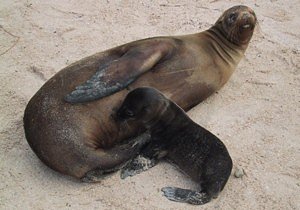
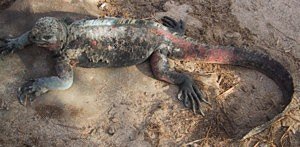
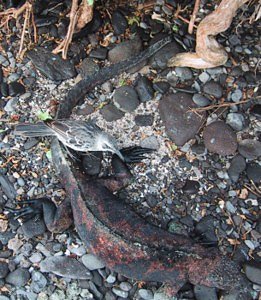
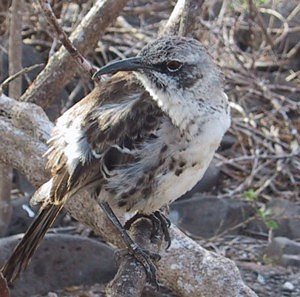
Today is the day we get close encounters with blue footed boobies, among other things. The day starts with the land - mostly dry but a high wave might wash onto the landing step and wet your feet if your not careful. We follow the trail clockwise and straight away we have some good stuff on show - sea-lions (mother and pup) and a marine iguana living in harmony with a mocking bird.
|
|
|
|
|
|
We have been warned that the mockingbirds are very inquisitive here (tame) so be very careful, they may dip into your back looking for scraps or swoop down for a drink of your bottled water.
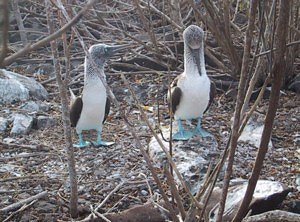
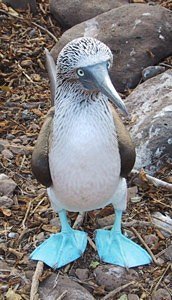
The trail takes us first through shrubby/bushy areas with blue-footed boobies in abundance.
 |
|
It was here that we had our first mini-lecture on blue-footed boobies and in particular the "Booby Dance". As if watching the boobies wasn't good enough we then entered into the colony of the Waved Albatross. Almost the entire world population of Waved Albatrosses live on Espanola.
 |
|
These birds were fascinating to watch. They were preparing for the forthcoming mating season, and so were practising their beak smacking (if that's what you call it). The birds were so unafraid of our presence that they sat, unmoved, as we passed around them - one pair almost making a gate for us to walk through with head following as we passed. Gradually we worked our way through the colony and arrived at the cliff. It was here, in the strong winds, that they were spreading their wings and taking flight.
Also at the end the rock formations created a blow hole for sea spray as the waved crashed the shore.
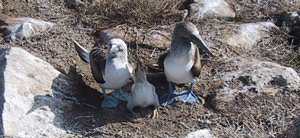
Returning back to the landing point we had to pass through another colony of nesting boobies. Some of them proud parents and some just protecting their young.
|
|
 |
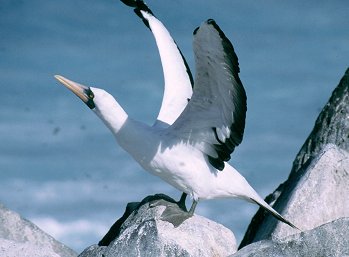
Here, too, boobies practised their dance and just stood around (often under foot!) looking cute. Further round and time for the Masked Booby colony and Marine Iguana colony.
|
|
|
Returning to the panga and the viewing isn't over yet. The beach has a young sea-lion pup looking for its mother and being rejected by two on the beach. Also along the beach there are the usual Marine Iguanas, except that the Espanola Marine Iguanas are more colourful that on other Islands, which you can see below.

Marine Iguanas
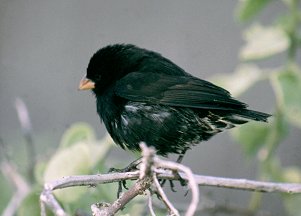
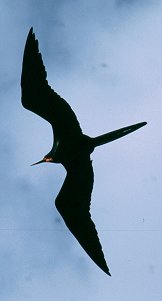
Also on the beach there was an American Oyster Catcher (not very different any other Oyster Catcher) and close by one of the "Darwin Finches" and frigatebirds overhead.
|
|
|
All this, and it is only lunchtime. This must be about as good as it gets.
During lunch and for some of the afternoon the boat sails the 40 or so miles to Santa Cruz and, for us, the Charles Darwin Research Centre.
Santa Cruz : Back : Galapagos Contents : Contents